Feature

Automate Your Video Production Workflow

Every production team has repetitive tasks that eat into creative time: updating statuses, sending notifications, assigning reviewers, setting blockers. RecReview workflow automation handles these mechanical steps so your team can focus on making great videos.

Trigger-Action Rules

Build automation rules using a simple trigger-action model. When a specific event occurs, one or more actions execute automatically. Upload a video and the task moves to "In Progress." Complete all subtasks and the task advances to "Review." Client approves and the task moves to "Delivered."

Triggers include task creation, status changes, phase transitions, video uploads, comment additions, review status changes, timer events, subtask completion, and blocker changes. Actions include setting status, setting phase, assigning blockers, creating subtasks, sending notifications, sending emails, and triggering webhooks.

Each rule can have conditions that narrow when it fires. A rule might only apply to tasks in a specific project, or only when the status changes from a particular value. This precision prevents automations from misfiring on tasks they should not affect.

Workflow Presets to Get Started Fast

Not sure how to structure your automations? Start with one of the built-in presets. The Video Production preset creates a complete workflow with subtasks for scripting, recording, editing, and multi-round reviews. The Agency preset simplifies things for briefing-to-delivery cycles within your project management board. The Simple preset covers just timer tracking and review automations.

Presets create a starting point that you can customize. Add rules, remove ones that do not fit, or adjust conditions to match your team. You are never locked into a preset configuration.

Blocker Management

Blockers indicate that a task cannot progress until a specific condition is met: client review pending, internal review required, assets missing. RecReview makes blockers a first-class concept that integrates with automations and the project board.

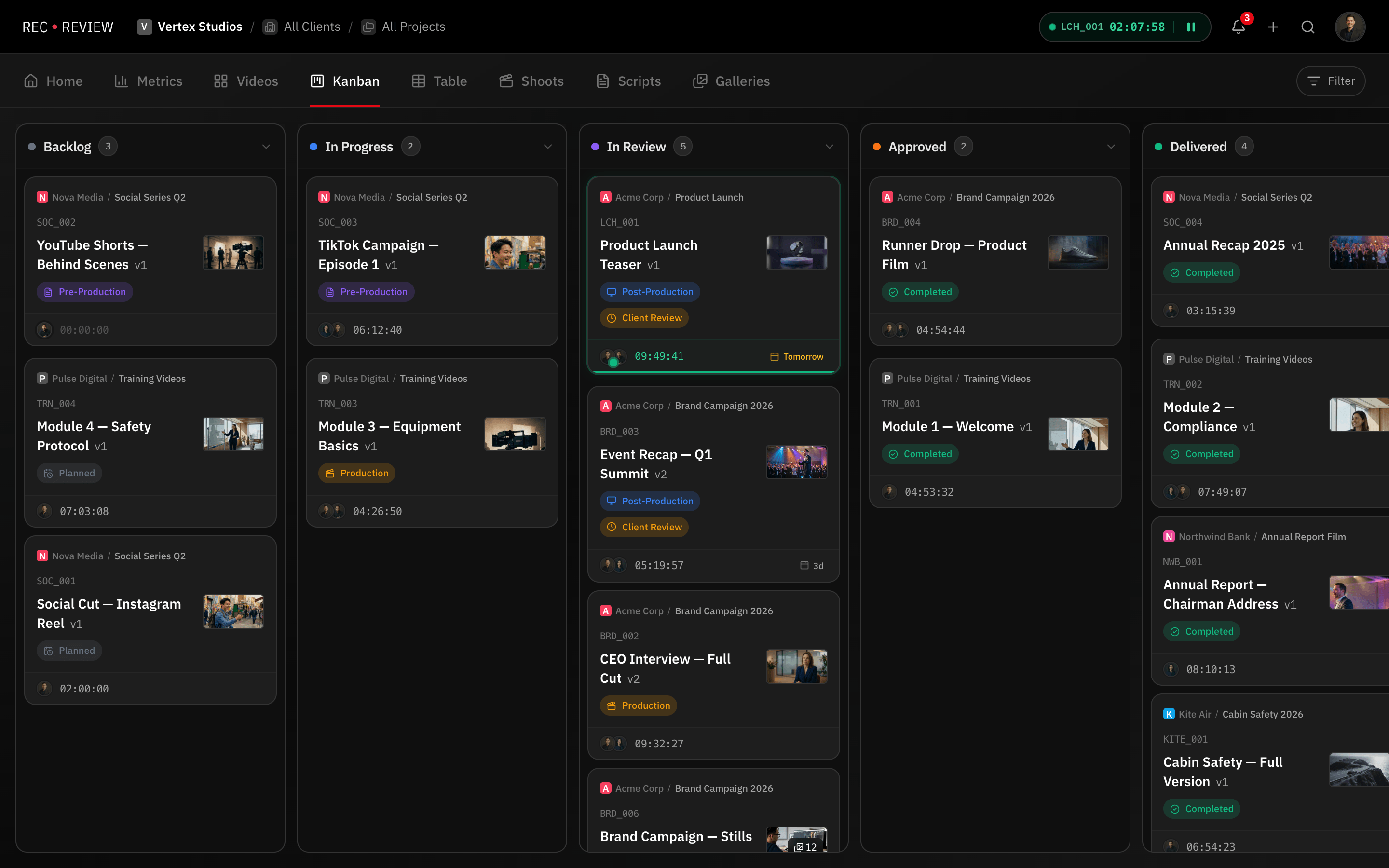
When a blocker is set, the task is visually flagged on the kanban board. Automations can set blockers automatically when a task enters the review phase, and remove them when quality checks pass and a reviewer approves. This prevents tasks from advancing prematurely and keeps the workflow honest.

Blockers combined with notifications ensure the right people know when their action is needed. When a client review blocker is set, the client receives a notification. When the blocker is removed upon approval, the editor gets the green light to proceed.

Notifications and External Triggers

Automations can send in-app notifications, email notifications, or trigger outgoing webhooks. This flexibility lets you keep your team informed through their preferred channels and integrate with external tools.

Webhook actions are particularly powerful for teams using RecReview alongside other production tools. Trigger a webhook when a video is approved and your project management system updates automatically. Trigger another when a delivery is sent and your invoicing system creates a draft invoice.

See it in action

Start your free trial and experience it yourself.

Start 15-Day Free Trial →

No credit card required

Frequently Asked Questions

Do I need to code to set up automations?
No. Automations are configured through the workspace settings interface with dropdown menus for triggers, conditions, and actions. No coding required. Presets provide ready-made automation sets you can activate with one click.
Can automations trigger other automations?
Yes. An automation that changes a task status can trigger another automation that is listening for status changes. This allows you to build complex workflows by chaining simple rules together.
What happens if an automation creates a conflict?
Automations execute in a defined order and the system prevents infinite loops. If two automations would create a conflicting state, the last one to execute takes precedence. You can test automations before deploying them to production workflows.
Can I disable automations temporarily?
Yes. Individual automation rules can be enabled or disabled without deleting them. This is useful for testing, troubleshooting, or pausing specific workflows during unusual project phases.
Explore More

Related Features

Try it free for 15 days

No credit card required. Full access to all features.

Start Free Trial →